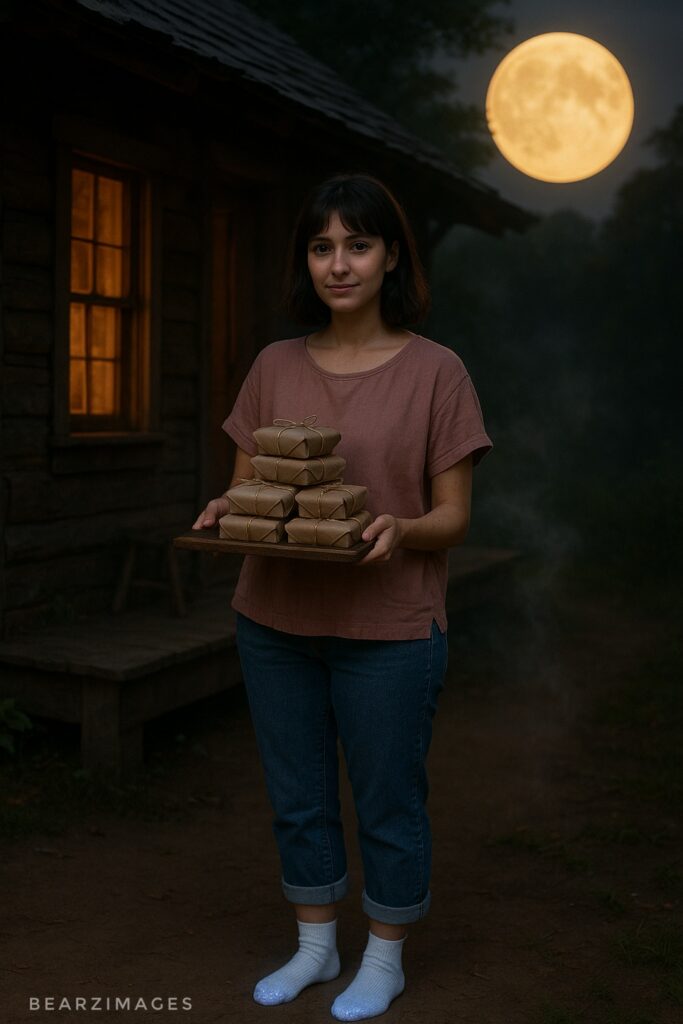
In the sleepy folds of the Appalachian hills—where morning mist clung to the pines like secret whispers—there lived a woman known only as The Mystic Baker.
She kept to herself in a weathered cabin with a crooked chimney and a porch that sagged just enough to creak in greeting when you stepped on it. Her name, if she had one, was lost to time. Folks just called her that moon pie lady.
She was always seen in magic bobby socks—white as winter milk, rolled just right, always perfectly clean no matter the weather. Kids swore they never got wet, even when she walked barefoot through the dewy grass. The old men at the feed store claimed they could see them glow in the dark. And the women at the church… well, they had plenty to say, but none of it kind.
They whispered that she baked her moon pies under a wandering moon—only when it hung low and golden, or sharp as a silver sickle. That she spoke to her pies as they cooled, whispering words in a language no one knew. That her pies had a strange effect on people—making some laugh for days, others cry tears they couldn’t explain, and a few suddenly remember the names of long-dead lovers.
So they misjudged her.
They called her strange, touched, a woman meddling in things best left to God. They didn’t see the way she’d leave warm pies on doorsteps when the baby was sick, or how she always knew when the mine had taken another man and left his family in the cold. They didn’t see her barefoot in the moonlight, socks shimmering, carrying pies into the woods for the foxes and the owls—because, she said, they were her first customers.
The truth was simple: her socks weren’t magic because they kept her feet dry or glowed. They were magic because they reminded her who she was—before the world told her to be smaller. Before the people she loved had chipped away at her shine. She wore them like armor.
One autumn night, when frost painted the grass and the moon hung fat and orange over the ridge, the whole town gathered for the Harvest Fair. The Mystic Baker appeared with a crate of moon pies, each wrapped in brown paper and tied with twine.
People hesitated at first, but hunger and curiosity have a way of dissolving suspicion. One by one, they bit in. And something happened.
The sheriff remembered the scent of his grandmother’s kitchen.
The widow on Elm Street felt her husband’s arms around her again.
The schoolteacher laughed so hard she spilled cider on her shoes.
They looked at her differently that night—not as a witch or a weirdo, but as someone who carried a quiet, unshakable kind of magic.
And when the moon slipped behind the clouds, they swore they saw her socks sparkle one last time.
She went home before anyone could thank her.
But in every kitchen in that little town, people found themselves humming as they cooked—like maybe they had a bit of her magic now too.
-Bearz